Top Ad 728x90

Showing posts with label technology. Show all posts

Saturday, January 14, 2017

Leaked Samsung Galaxy S8

by


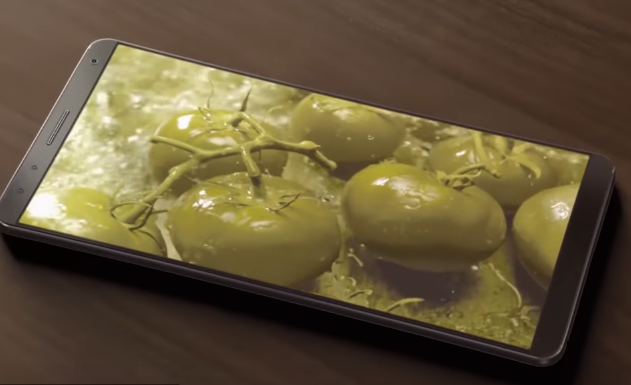
Samsung may just have leaked the Samsung Galaxy S8, so the latest leak comes in all of a video and this video is from the Korean Youtube channel SAMSUNG DISPLAY showing off the latest display technologies of Samsung and we did see a mysterious device which has a super large display with minimal bezels.

source:CNET

Now base on this leak looks like we will be getting a very large display, larger and no longer gonna have a physical home button, this could mean that the fingerprint sensor is embedded within the display which is absolutely great other leaks do suggest that the device might have a 4K Display so this would be super high resolution.


We still may see a standard flat display as well as curved display like we've seen in previous years, we may also lose the headphone jack but not yet confirmed release date is rumored to be around April 18 this year

What do you think of these leaks?

Sunday, January 8, 2017

Nokia 6 - Nokia's First Android Smartphone Finally Revealed

by


HMD Global, the Finnish company that owns the licensing rights of Nokia’s brand on mobile phones has just unveiled the Nokia 6 — the company’s first Android-powered smartphone which runs on Google’s latest Android 7.0 Nougat.


It features a 5.5-inch full HD display with Gorilla Glass protection . Qualcomm’s Snapdragon 430 chipset powers the handset, paired with the Adreno 505 GPU. Under the hood, it packs 4GB of RAM with 64GB internal storage. There’s also the 16MP rear-facing camera with an f/2.0 aperture and an 8MP front-facing camera sporting the same aperture. Watch the official first look of the handset below.


For now, the Nokia 6 is targeted for Chinese users with a price of 1,699 yuan or ~Php12,100 when converted to peso. International and local availability is yet to be announced so stay tuned! Nokia 6 specs: 5.5-inch Full HD IPS LCD display 2.5D contoured glass with Corning Gorilla Glass 3 Protection 64-bit Qualcomm Snapdragon 430 octa-core CPU Adreno 505 GPU 4GB RAM 64GB internal storage up to 128GB via microSD 16MP rear camera w/ Laser AF, PDAF, Dual-tone flash 8MP front-facing camera 4G LTE Fingerprint scanner USB OTG 3000mAh battery with fast charging Android 7.0 Nougat 154 x 75.8 x 7.85 mm Author’s note: “Nokia’s first Android smartphone officially revealed”, was edited to clarify that the Nokia 6 is the first Nokia Android smartphone under HMD Global.


For now, the Nokia 6 is targeted for Chinese users with a price of 1,699 yuan or ~Php12,100 when converted to peso. International and local availability is yet to be announced so stay tuned!

Nokia 6 specs:
5.5-inch Full HD IPS LCD display
2.5D contoured glass with Corning Gorilla Glass 3 Protection
64-bit Qualcomm Snapdragon 430 octa-core CPU
Adreno 505 GPU
4GB RAM
64GB internal storage
up to 128GB via microSD
16MP rear camera w/ Laser AF, PDAF, Dual-tone flash
8MP front-facing camera
4G LTE
Fingerprint scanner
USB OTG
3000mAh battery with fast charging
Android 7.0 Nougat
154 x 75.8 x 7.85 mm


Author’s note: “Nokia’s first Android smartphone officially revealed”, was edited to clarify that the Nokia 6 is the first Nokia Android smartphone under HMD Global.


Yugatechsource

Thursday, April 23, 2015

Google introduces Project Fi Wireless Service

by


Google has introduced a brand new wireless service referred to as Project Fi that aims to supply its subscribers the most effective network connection at their location whether or not its wifi or 4G LTE.

Project Fi is essentially a service that provides you access to a bundle of wireless connection using the Project Fi SIM card. As mentioned earlier it aims to give you to the highest-quality of affiliation out there in your area


If you’re in a location where there is a healthy 4G LTE connection, Project Fi will automatically connect you on that network. If 4G LTE is not available it will then automatically move you on a better network type like 3G or 2G or to more than a million free, open WiFi hotspots that Google has verified as fast and reliable. Do note though that this isn’t an independent mobile network or ISP as Project Fi uses Sprint and T-Mobile network for its services.

Like any other mobile internet service, Project Fi offers plans for its subscribers but with no annual contracts. Plans starts at $20 per month for the Fi Basics and includes the following:

* Unlimited domestic talk and text
* Unlimited international texts
* Low-cost international calls
* WiFi tethering
* Coverage in 120+ countries

Then on top of that is $10 per GB for cellular data giving you a minimum of $30 per month for 1GB up to $120 per month for 10GB. If you have unused data it will be applied as a credit towards you next month’s bill so you only pay for what you use. In addition, you won’t be charged if you’re connected to an open or home WiFi.


Yugatech
source


Monday, April 20, 2015

Russian Man to Undergo World's First Human Head Transplant

by


Computer programmer Valery Spiridonov is battling a rare genetic muscle wasting disease and wants his head to be transplanted to a new body

Revolutionary op: Valery Spiridonov hopes to get new body

A man who wants to be the world's first head transplant patient is set to meet the surgeon who has been lined up to carry out ground-breaking 36-hour procedure.

Computer programmer Valery Spiridonov has the rare genetic Werdnig-Hoffman muscle wasting disease and wants his head to be transplanted to a new body.

The 30-year-old, who only has one leg and is confined to a wheelchair for the rest of his life, hopes to have the breakthrough operation in 2017.

Valery, from Vladimir in Russian, has appealed to President Vladimir Putin to help fund research into the pioneering project.

And his dream has moved a step closer as he is set to meet Italian surgeon Sergio Canavero and other leading neurosurgeons next Thursday in New York.


Desperate: Valery has appealed for funding for op


He said: "This is ground-breaking research and we need a lot of funding. If I can get the right body I will look after it and nourish it.

"This could transform the lives of hundreds of thousands of people. Where there is an opportunity there is hope."

Valery admits the prospect of going through with the operation is terrifying.

He added: "I am afraid, but what people don't really understand is I don't really have many choices.

"If I don't try this out my fate will be very sad. With every year my situation is getting worse."

He added: "My decision is final and I do not plan to change my mind."


 Wheelchair: Valery cannot walk
Dr Canavero said he had received many emails and letters from people seeking the operation and added that he had already decided the first patient would be someone suffering from a muscle-wasting disease.

The Frankenstein-like procedure has some medical precedent as it was recently reported that Chinese scientists had carried out a head transplant on a mouse.

But most medical experts say a human head transplant is pure fantasy.

President elect of the American Association for Neurological Surgeons Dr Hunt Batjer told CNN: "I would not wish this on anyone.

"I would not allow anyone to do it to me as there are a lot of things worse than death."


If you put yourself to Valery's situation would you be willing to undergo?


Mirror.co.ukSource


Tuesday, January 27, 2015

FACEBOOK LITE App Launched on Google Playstore

by

Can’t use the heavily-sized Facebook app on your low-end devices? You might want to take a closer look on the new Facebook Lite app for Android, giving you almost the same social media network experience for less of your storage space.

Built for the emerging markets, Facebook Lite offers its users full access the social networking service and use essential features also seen on the regular app such as browsing your news feed, adding pictures, comments, likes, shares and many more. The web-based app only eats less than 1MB of your storage, and it is designed to work for 2G networks with limited network connectivity by optimizing web page loads, enabling faster loads and providing more efficient data.


Sadly though, this isn't yet available in the country as the app is initially offered to selected emerging countries such as Bangladesh, Nepal, Nigeria, South Africa, Sudan, Sri Lanka, and Vietnam. As always, there are ways to side load the app into your smartphones if you know how to do the drill, or use a third-party Facebook app instead to suffice your need for social media.


Yugatech

Thursday, October 2, 2014

Lenovo Vibe Z2 PRO,Monster Phone Of ASIA

by

It's no secret that users in the Indian subcontinent love large screens, and today Lenovo is catering to that segment with the launch of the Vibe Z2 Pro – a high-end phablet boasting a 6-inch QHD display.

This isn't the first device with a QHD display in India, as the LG G3 and Oppo Find 7 are already available for sale in the country. The Vibe Z2 Pro is aiming to be the most affordable of the bunch with a retail price of Rs. 32,999 ($550). The LG G3, in comparison, costs about Rs. 39,490 ($640).

For the price of a bamboo-backed Moto X, you'll be getting a device with a resolution of 2560 x 1440, 2.5 GHz Snapdragon 801 (MSM8974AC) CPU, 3 GB RAM, 32 GB internal memory, 16 MP camera with OIS and ability to shoot 4K video, 5 MP front shooter, Wi-Fi ac, LTE Category 4 connectivity, NFC, Bluetooth 4.0 and a 4,000 mAh battery.


The device features Lenovo's Vibe 2.0 UI atop Android 4.4.2 KitKat, but if you're not a big fan of manufacturer skins, the Vibe Z2 Pro comes with an option that allows you to run stock Android. Available in black, gold and titanium color variations, the Vibe Z2 Pro will be up for sale starting October 6 exclusively on Flipkart.

How many of you would buy the Vibe Z2 Pro if it was available in your country?


Watch Video Review Here:


Android Central

Saturday, September 13, 2014

Say Goodbye to Apple Ipod Classic

by

We saw this nearing yet Mac has at long last abandoned the ipod Classic. Amid the webpage invigorate that Mac did just after the new iphone 6 was affirmed, all Mac Online Stores have removed the ipod Exemplary from their postings.


This is actually puts an end to the time of hard-drive-based ipod Classic


The media player has not been re-intended for a few years and offers of the ipod classic have likewise declined because of fresher models like the ipod Touch. There were 6 eras of the ipod Exemplary (initially simply called the ipod) with the most recent one having 160gb inner stockpiling.

Mac did not put forth any expression in regards to the expulsion of the ipod Excellent from their authority line-up.


via Apple Online Store

Samsung Note 4 -Beast Phone of 2014

by

Samsung has unveiled the Galaxy Note 4: its fourth-generation smartphone with a stylus for taking notes and sketching. Here's everything you need to know about the Note 4 release date, price and specs in the UK. See also: Galaxy Note 4 launch - as it happened

The Note 4 looks much like the Note 3, having the same size 5.7in screen, soft-textured back and metal band around the edge. However, there are plenty of changes and updates: keep reading to find out what they are.

Read next: Samsung Galaxy Note 4 hands-on review

Samsung Galaxy Note 4: Release date
The Note 4 will go on sale in October, so there's not long to wait. As soon as we have an exact date for the UK release, we'll update this story. It will be available in four colours: black, white, gold and pink.

Samsung Galaxy Note 4: Price
There's still no word on a UK price, but the Note 4 is likely to come in between £550 and £600 – similar to the Galaxy S5.


Samsung Galaxy Note 4: specifications

Screen

The big news as far as hardware is concerned is that the screen is now a 'Quad HD' display, with a resolution of 2560x1440 - that's a whopping 515ppi. It's covered in '2.5D glass' which means it has a very slight curve. The Note 3 has a flat screen with merely a full HD 1920x1080 resolution. The 5.7in diagonal means it's not much larger than many phones these days, and smaller than the LG G Flex


UV sensor

Another big feature, which Samsung didn't really mention during the launch is that the Note 4 is the first mobile device with a built-in UV sensor. Part of the S Health system, it will warn users if they are getting too much sun.

There are a total of 5 UV index levels: Low, Moderate, High, Very High and Extreme, and users will be presented with different precautions based on the level of the sun’s ultraviolet radiation.

Fingerprint scanner
The fingerprint scanner is improved in the Note 4. All four fingerprint canning features in the Galaxy S5 - Screen Lock, Private Mode, Samsung Account Verification and PayPal Payments - are coming to the Note 4.


S-Pen

The S-Pen - or stylus - now has 2048 levels of pressure sensing, double that of the Note 3. A new S-Pen feature is Smart Select which allows you to capture several pieces of information at once. For example, you could clip a couple of hotels from TripAdvisor and then some images from another source, then share that group of selections with a contact by dragging and dropping into an email.

The new Snap Note feature can automatically straighten images taken with the camera, and then convert any text into editable copy.


Microphones

Not all notes are visual, and the voice recorder has been improved in the Note 4 by using three microphones to record sounds from 8 distinct directions. The interview mode uses noise suppression to isolate the interviewee and make the voice clearer. Noise cancellation, using the extra microphones, also improves phone calls, especially when using speaker phone.

Cameras

Instead of talking about numbers, Samsung says it wants to concentrate on ease of use and ‘quality images’ with the Note 4. To that end, it has a 3.7Mp front-facing camera (with a bright f1.9 aperture) and a 16Mp rear camera with optical image stabilisation.

The bigger aperture makes the front camera 60 percent brighter than the Note 3, so it should provide better images in dim conditions. It's also possible to use the heart-rate sensor on the back as a shutter button.

Another change on the front camera is that it has a wider viewing angle of 90 degrees (as opposed to the 77 degrees of the Note 3) and there’s also a panorama mode which increases the angle to 120 degrees.

Battery life:

A new fast charging charges from zero to 50 percent in 30 minutes. It takes about 55 minutes to charge the Note 3 from empty to half full. The Note 4 also has lower power consumption, which gives a 7.5 percent increase in battery life, despite having the higher-resolution screen and only marginally higher-capacity 3220mAh battery (the Note 3 has a 3200mAh cell.

Storage and memory

The Note 4 has 32GB of internal storage and a microSD card slot capable of accepting up to 64GB cards. Contradicing rumours of 4GB of RAM, there's actually 3GB.

The full specifications are below:

Network
2.5G (GSM/ GPRS/ EDGE) : 850 / 900 / 1800 / 1900 MHz
3G (HSPA? 42Mbps): 850 / 900 / 1900 / 2100 MHz
4G (LTE Cat 4 150/50Mbps) or 4G (LTE Cat 6 300/50Mbps)
* May differ by country and carrier
AP
2.7 GHz Quad-Core Processor
1.9 GHz Octa-Core (1.9GHz Quad + 1.3GHz Quad-Core) Processor
*May differ by country and carrier
Display
5.7 inch (143.9mm) Quad HD Super AMOLED (2560 x 1440)
OS
Android 4.4 (KitKat)
Camera
Rear Facing: 16Mp Auto Focus camera with Smart OIS
Front Facing: 3.7Mp camera with f1.9
Rear Facing Camera : HDR (Rich tone), Selective Focus, Rear-cam Selfie, Beauty face, Virtual Tour Shot, Shot & More, Dual Camera
Front Facing Camera: Selfie, Wide Selfie
Video
Codec: H.264, MPEG-4, H.263, VC-1, WMV7, WMV8, Sorenson Spark, MP43, VP8
Recording & Playback: up to UHD
Audio
Codec: MP3, AAC/AAC?/eAAC?, WMA, AMR-NB/WB, Vorbis, FLAC(?)
(?) Ultra High Quality Audio (~192KHz, 24 bit) support
S Pen Optimized Features
Air Command (Action Memo, Smart Select, Image Clip, Screen Write)
S Note, Snap Note, Direct Pen Input
Additional Features
Multi Window
Ultra Power Saving Mode
Voice Recorder (Normal Mode, Interview Mode, Meeting Mode, Voice Memo)
Download Booster
S Health 3.5
Dynamic Lock Screen
Briefing
Google Mobile Services
Chrome, Drive, Photos, Gmail, Google, Google+, Google Settings, Hangouts, Maps, Play Books, Play Games, Play Newsstand, Play Movie & TV, Play Music, Play Store, Voice Search, YouTube
Connectivity
WiFi 802.11 a/b/g/n/ac (HT80) MIMO PCIe
GPS / GLONASS / Baidu
NFC, Bluetooth® v 4.1 (BLE,ANT+)
IR LED (Remote Control), USB2.0, MHL 3.0
Sensor
Gesture, Accelerometer, Geo-magnetic, Gyroscope, RGB,IR-LED
Proximity, Barometer, Hall Sensor, Finger Scanner, UV, Heart Rate Monitoring, SpO2 (Dependent on market)
Memory
32 GB Internal memory ? micro SD slot (up to 64GB)
3GB RAM
Dimension
153.5 x 78.6 x 8.5mm, 176g
Battery
Li-ion 3,220mAh, Fast Charging (Adaptive Fast Charging & QC2.0)

Samsung Galaxy Note 4: Software

The Note 4 runs Android KitKat - no surprises there - but Samsung has also worked on the user interface to make it easier to use.

One of the biggest complaints from users was that Multi Window was too hard to use, and we'd have to agree. On the Note 4, Multi Window is part of the recent key. Using your finger or the S-Pen you can minimize an app and make it run as a ‘pop out’ window, as well as using split view where you can run two apps, one in each half of the screen. Plus, it's simple to adjust how much space to give each app by dragging the dividing line.

Other software changes include dynamic lock screens with images from third-party providers including Yahoo! You can, of course, choose your own images.


Android Central
Source

Thursday, August 7, 2014

They Invented A Vending Machine That Feeds Animals Every Time Trash Is Discarded. Wow!

by
One innovative company has created a vending machine that works with the environment and helps feed the 150,000 homeless cats and dogs.


Turkey is known for its large numbers of stray animals roaming its urban areas. According to Deutsche Welle in Istanbul alone there are more than 150,000 stray dogs and cats. Some of the residents welcome their company and help feed them but others have complained that the animals are dangerous and spread disease. Because of these complaints, the Turkish government went on to draft a law which would move thousands of stray dogs to be to a “wildlife park,” getting the animals out of the urban environment which they are used to. 


Dogs have also allegedly been the targets of poisoning campaigns, according to the Associated Press. Thankfully the Turkish company Pugedon came up with the genius idea of placing vending machines across the city of Istanbul. These machines release food and water for the city’s stray dogs in exchange for recycled plastic bottles (the recycled bottles cover the cost of the food). 

How it works is the bottle powered dispensers releases pet food each time someone places a plastic bottle inside the machine. There is also has a container where you can pour the remainder of your water to make sure stray cats and dogs also have something to drink. Apart from keeping the urban animals alive, the vending machine are a great way to make people stop and think about the animals out on the streets and could perhaps be enough to make some consider adopting an animal to help deal with the problem. 

This genius simple machine will provide a steady source of food to the animals, who often rely on the area’s residents to feed them. It’s also bringing some positive change to a place where the fate of stray animals has not always been a happy one. Most of the machines can be found in parks and public areas throughout the city so while they encourage the public to recycle our furry friends are being feed too.


Natural Cures Not Medicine
source

Wednesday, July 23, 2014

Takee 1 Claims To Be World’s First Holographic Phone

by

A couple of years ago when the concept of 3D movies was starting to catch on, some companies, namely HTC and LG, decided that it would be a good idea to create 3D phones as well, meaning that users could look forward to 3D content and games without the need for 3D glasses, kind of like the Nintendo 3DS.

However fast forward to today, it seems that the idea of 3D phones did not catch on, but could holographic phones be next? Well a device by the name of the Takee 1 is hoping to kick off the trend with its holographic handset, which they are calling the world’s first holographic phone. In some ways it reminds of us Amazon’s recently announced Fire Phone as it does share similar features.

For starters the phone will sport a pair of cameras in the front that will track your face. From there, it will tweak the UI to create a depth effect, which like we said sounds a bit like the Amazon Fire Phone. However what makes it different is its ability to scan real world images using the camera to create 3D objects which can then be 3D printed, which in some ways reminds us of Google’s Project Tango.


The company also claims that the phone will be able to use in-air controls to allow the user to manipulate holographic images that will float above the phone’s display, as you can see in the video . Now we’re not sure whether the video is using a mock up or if that’s how the actual projections would look like, but if it’s the latter, we have to say we’re very impressed.


As for the rest of its specs, the phone will feature a 5.5-inch Full HD display, a 13MP f/2.0 rear-facing camera, an octa-core MT6592T processor, a 2,500mAh battery, 32GB of onboard storage, and dual-stereo speakers. The company also claims that the phone’s metal chasis has been built using a new 3D metal cutting technology, and will be available in black, white, or a special edition 18k gold version.


Pricing and availability remain unknown but it will be interesting to see if it will be able to live up to its claims. What do you guys think? Could this be a case of overpromising and under delivering, or could Takee surprise us all and take the world by storm with its smartphone?


Ubergizmo
source


Sunday, July 20, 2014

Frozen Smoke-Aerogel

by

The Miracle Material                                                   

Take a look into the house of the future: sleek, spacious rooms, furniture made from recycled material, and..."frozen smoke"? This frozen smoke, technically known as aerogel, is an extraordinary material that may find a way into your home sometime in the near future. As engineers discover ways to make this substance more affordable, the number of practical applications is increasing at an amazing pace. From home insulation and blankets to tennis rackets, ski jackets, and refrigerators, aerogel may revolutionize many facets of everyday life.
So what exactly is aerogel? While some materials may exhibit a low density, high thermal resistivity, or high strength-to-weight ratio, only aerogel can claim all of these properties at once. The name aerogel comes from the combination of the Greek word "aero", meaning air, and "gel", since aerogels are derived from gels. Normally, a gel is approximately 99% liquid, while the remaining 1% is a solid network that spans throughout the liquid and can allow the gel to maintain its shape. With a density only three times that of air, aerogel is what is left after replacing the liquid contents of a gel with a gas -- without shrinking it . As shown in Fig. 1, the result is an opaque blue solid that is composed of anywhere from 95-99% air. The texture of aerogel is similar to a fine, dry sponge, but feels much lighter. In fact, aerogel holds the record as the lightest solid in the world. When pressed softly, aerogel will return to its original form, but when pressed harder, a dimple forms. Put aerogel under too much pressure, however, and it will shatter like glass into many tiny pieces. Although it was first produced over 70 years ago, it has taken recent research and applications for it to be hailed as a "miracle material"

It Started With a Bet                                                 


In the early 1930's, Stanford University's Samuel Kistler had a bet with a fellow scientist over who could first remove the liquid portion of a gel without compromising its volume. Kistler won, and aerogel was the result. Normally when a gel dries, it shrinks to a fraction of its original size because the surface tension of the liquid leaving the gel collapses its polymer structure. Working with the knowledge that a liquid at sufficiently high temperature will become a gas, Kistler developed the process of supercritical drying, or raising the temperature and pressure on the gel so that it reaches the point where the liquid in the gel is no longer distinguishable as liquid or gas. Once in this supercritical state, the molecules of the liquid can be removed and the remainder slowly cooled to form aerogel. At the time, aerogel did not receive much recognition and was not considered for any contemporary applications because of high costs and its lengthy and volatile method of production.
Aerogels would not make another major appearance in the scientific world until the 1980's, when a group of researchers led by Arlon Hunt of Lawrence Berkeley Laboratory came upon a sample. Hunt and his team worked to improve the material's clarity, production methods, and thermodynamic properties. One of the first projects the team worked on was finding a safer way to produce the substance. The base chemical used to make aerogels, tetramethylorthosili​​cate (TMOS), is highly toxic and can easily damage the human eye. At the time, it was known that aerogels could be made using a safer compound, tetraethylorthosilic​​ate (TEOS), as a substitute for TMOS, but the resulting aerogel was smaller and less clear. Hunt's team experimented with the other chemicals involved in aerogel production and was able to achieve a clearer and less shrunken TEOS aerogel.
Although this accomplishment made aerogel production slightly safer, it was still not safe enough to attain widespread use. Hunt continued to work toward improving aerogel production after hearing news that an aerogel lab in Sweden had exploded. Originally, aerogel's drying process required alcohol to be exposed to extremely high pressures and temperatures, creating a very dangerous, combustible environment. Hunt found that liquid carbon dioxide was an excellent substitute for alcohol, not only because it was inflammable, but also because it required less heat and pressure to become supercritical . Therefore, using liquid carbon dioxide not only made the process safer but also more energy efficient and cheap enough to be considered for commercial manufacturing


The Future                                                                  


Aerogel is expected to make a significant impact in sustainable and "green" development. Because of aerogel's exceptional thermodynamic properties, it is not just an ideal insulator for clothing, but for buildings as well. Aerogel wall insulation can achieve the same insulation effectiveness as traditional fiberglass at less than a third of the thickness. In addition, aerogel can be made hydrophobic, allowing it to prevent mold growth by repelling water vapor. It is also possible that aerogel may replace today's windows. One of the main challenges facing engineers is making the material more transparent. Once the blue tint is removed, aerogel can be put between double-pane windows to further limit heat transfer in buildings. According to NASA, current opaque aerogel has the same insulating ability as 10-20 glass panes. demonstrates aerogel's unparalleled ability to resist heat transfer..
Other predicted uses of aerogel include armor for military vehicles and a "sponge" utilizing aerogels' pores to soak up lead and mercury spills in the ocean. The idea of aerogel armor came after experiments showed a metal plate with a protective aerogel layer was found to sustain little damage when exposed to a blast of dynamite. Also, Aspen Aerogels has taken their clothing insulation a step further, and plan to fabricate a space suit for a manned mission to Mars in 10 years. Scientists at the company believe that the insulation will be able to withstand temperatures as low as -130 C. There may be another "green" use of aerogels as well, as research has found that platinum-based aerogel can speed up the production of hydrogen for use as fuel. If implemented successfully, this technology would be able to provide cheaper alternative fuels to combat the high cost and limited supply of oil.
With most aerogel applications, however, cost is still a prohibitive factor. For now, although aerogel insulation is much more effective at retaining heat compared to typical fiberglass insulation, fiberglass insulation is unlikely to be replaced, mostly due to its low cost. Recently, Aspen Aerogels announced plans to increase their plant size to produce larger quantities of their aerogel blankets and in turn reduce their cost. It seems, though, that aerogel production needs just a few more engineering breakthroughs to finally become affordable enough for use widespread use. If the last 20 years are any


Source

Hover Car, The Flying 2 Seater,Volkswagen People's Car Project,

by

The days of the hovercraft are upon us. AsGoogle's self-driving cars prepare to roll out onto the streets of Nevada, Volkswagen one-ups everyone with its concept design for a hover car.

The Volkswagen hover car is a product of the "People's Car Project" in China, which called upon customers to contribute design ideas for Volkswagen's model of the future.

The crowd-sourcing initiative debuted in China last year and, to date, has inspired33 million website visitors to submit 119,000 ideas.

The hovercraft, as seen in the concept video above, uses electromagnetic levitation to float along its own grid above the regular road network; distance sensors keep the craft from colliding with other vehicles. The disc-shaped pod seats two people and is controlled by a joystick that offers amazing maneuverability. The car can move both back-and-forth and side-to-side and can even spin on an axis. To top it off, the concept car produces zero emissions.

Along with the hover car concept, Volkswagen presented two other ideas from the "People's Car Project" at the 2012 Beijing Auto Show. Though the hover car is by far the coolest, the music car, which causes the exterior color of the car to change with the driver's choice of music, is a close second. Volkswagen also debuted an advanced touchscreen smart key that features information about crucial vehicle functions.

Volkswagen Director of Marketing Luca de Meo told the audience that the innovative ideas derived from the crowd-sourcing project mark the beginning of a new era.

“We are no longer just building cars for, but also with customers and at the same time initiating a national dialog which gives us a deep insight into the design preferences, needs and requirements of Chinese customers,” de Meo said during the event.

Check out other hovercrafts and flying cars in the Video below.


Source

Friday, July 18, 2014

iWatch - Apple Aiming for October Smart Watch Launch.

by


All you Apple lovers must read out the coming information as many rumors are comingfor Apple iwatch. Apple is working on its final launching plans to release its new product AppleiWatch in the span of the coming months . TheiWatch will be available to its users with two variants 1.7 inches and 1.3 inch screen . The smart watch will be available for both the genders ie. for Men and Women . The iWatch having smaller screen size will be available for women with vibrant colors and combinations.


The wearable Apple iWatch will be launched with a OLED display . The OLED display, which will have 320 x 320 pixels resolution will provide a great vision to its users . It is heard from source that iWatch will have a flexible display to compete with its other big brand smart watches like Motorola, Samsung, LG etc. Samsung the brand in technology is also working on flexible display smart watch and it will also launch in the couple of months. 

The Apple iWatch likely to be released at the end of September or in the beginning of the October 2014. In spite of the Apple, In the technology market Samsung Galaxy Gear, Motorola Moto 360, SonySmart Watches will also be seen till the end of this year. Apple Inc. Hired a Nike Key Designer to include a sporty look at its iWatch . 

The images for Apple iWatch looks a bit very interesting at the moment on the web portal. As per the images Apple iWatch seems so elegant and sporty whether it goes on men or if we talk about women.So Apple iWatch will be so impressive and smart in looks. Users have to wait a bit for the Apple iWatch to be launched in the Indian Markets. Price and other specification are not yet properly disclosed.


11 Simple Inventions That Could Change the World

by


We have a tendency to lionize mankind's mind-bogglingly complex inventions. It's why we teach our children about the Alexander Graham Bells and Thomas Edisons of the world, and scour the Internet for every little iPhone rumor we can find.

But sometimes, it's the simple technologies that truly change the world. Think of what pasteurization did for public health or what mechanical clocks did for, well, time. These unheralded inventions maybe don't appear incredibly complicated at first glance, but they nevertheless improved the lives of countless people.

So what are the little-known technologies that hold the power right now to transform the world for the better? We decided to find out and give them their due.


1. Chewing gum that fixes your teeth

The problem: Nearly 4 billion people around the world suffer from untreated oral diseases like cavities and gingivitis.

The solution: "Sweet Bites," a chewing gum that is enhanced with xylitol to clean teeth and prevent disease. Not only could the invention help the world make strides in oral health, but its creators also hope to have entrepreneurial women sell it in poor communities, helping spur economic development.


2. A mouth guard that can detect concussions

The problem: Detecting a concussion is difficult, and unknowingly allowing athletes to play with one can cause a lifetime of brain damage.

The solution: Mamori, which is Japanese for "protect," is a mouthguard with built-in sensors that can send alerts to players and coaches when a collision is intense enough to cause a concussion.


3. An Internet-enabled, portable hand sanitizer

The problem: One in four hospital patients in America gets sick just from being in the hospital, according to the Centers for Disease Control and Prevention. Despite the fact that hand washing reduces these cases of illness by up to 40 percent, there are few systems to ensure that hospital workers consistently wash.

The solution: A new tool, Swipe Sense, aims to revolutionize hand sanitizers by making them portable and connected to the grid. Hospitals can monitor their staff's use through an app and ensure that far fewer people contract preventable sicknesses inside hospitals.


4. A smokeless solar cooker for developing countries

The problem: Cooking in the developing world often requires large amounts of costly fuel and creates harmful smoke as a byproduct.

The solution: The Infinity Bakery and other similar solar ovens aim to reduce disease and save energy by offering an affordable, sun-powered cooker to developing communities. The oven, which concentrates the sun's rays, is made from recycled oil drums, wood, bamboo and clay, so it can be produced locally and quickly.


5. A cheap, portable water filtration device

The problem: Nearly 1 billion people lack access to clean and safe water, according to the Water Project, a nonprofit that focuses on water issues.

The solution: Portapure, a five-gallon water filtration device, can take dirty water from a lake or stream and turn it into clean, drinkable H20 -- without the need for purification tablets or electricity. The device can provide 3,000-5,000 gallons of drinkable water before it needs a new filter.


6. Water pipes that monitor their own leaks

The problem: We lose between $12.5 million and $92 million worth of clean drinking water every year in the U.S. due to leaking pipes, according to a 2005 studyby the American Society of Civil Engineers.

The solution:
"Smart Pipe" technology, which is still in development, would use nanosensors to monitor leaks in public water systems, making our water use more efficient. If brought to scale, this type of innovation could help communities detect leaks when they occur, and fix them early.


7. A way to scan food's nutritional content

The problem: Even though packaged foods are labeled with nutritional information, we often have no idea what's in the food we eat while dining out.

The solution: SCiO, a pocket-sized spectrometer. The device would measure the calorie and chemical content of food so that a person could essentially scan any food or drink and know precisely what's in it. The tool recently raised more than $2 million on Kickstarter.


8. A shower that reuses its own water

The problem: Showers waste a tremendous amount of water and require a huge amount of energy. Every year, 1.2 trillion gallons of water are used to shower in the U.S. alone, according to the EPA.

The solution: The OrbSys shower promises to reduce water use by a whopping 90 percent and energy use by 80 percent. The OrbSys recycles shower water by pumping it through a filter in a closed-loop system, and the clean water that comes out of the filter only needs to be reheated minimally. The device could result in dramatic water and energy savings if used on a large scale.


9. An electric bike wheel

The problem: Biking to work or school requires a lot of psychical strain and isn't realistic for those needing to wear business attire or travel long distances.

The solution: Smartwheel is a motorized bike wheel that can be used on any existing bike. Replacing one of a bike's wheels with a motorized one would effectively eliminate a lot of the downsides of bike commuting: the physical effort, the time constraints, the varied terrain. The wheel can allow a bike to reach about 20 miles per hour, and it can also synch up with a smartphone to protect against theft and monitor the rider's speed and distance.


10. Packaging made from mushrooms

The problem: Plastic packaging and materials are petroleum-based and usually not biodegradable, causing a host of environmental and health consequences.

The solution: A new company called Ecovative says it has the solution to the wasteful and environmentally destructive use of plastics in packaging, insulation, and cars: materials made of agricultural byproducts and mushrooms. "There's a great future in plastics," goes the iconic quote from the 1967 film "The Graduate." Now may be a great future in, of all things, mushrooms.


11. Electricity-generating fabric

The problem: Our bodies generate a significant amount of heat, but this energy is lost into the environment. We are in need of alternative energy sources that don't create toxic pollution.

The solution: Clothes that charge your phone may sound like a fantasy, but this technology is actually in development. Power Felt is a fabric that can harness body heat to produce electricity. A small piece of the fabric could could allow a person to charge a cell phone just with his or her body heat.

"The idea is to make something that isn't intrusive and just gives people an extra boost," David Carroll, the inventor, told Business Insider.


Top Ad 728x90